

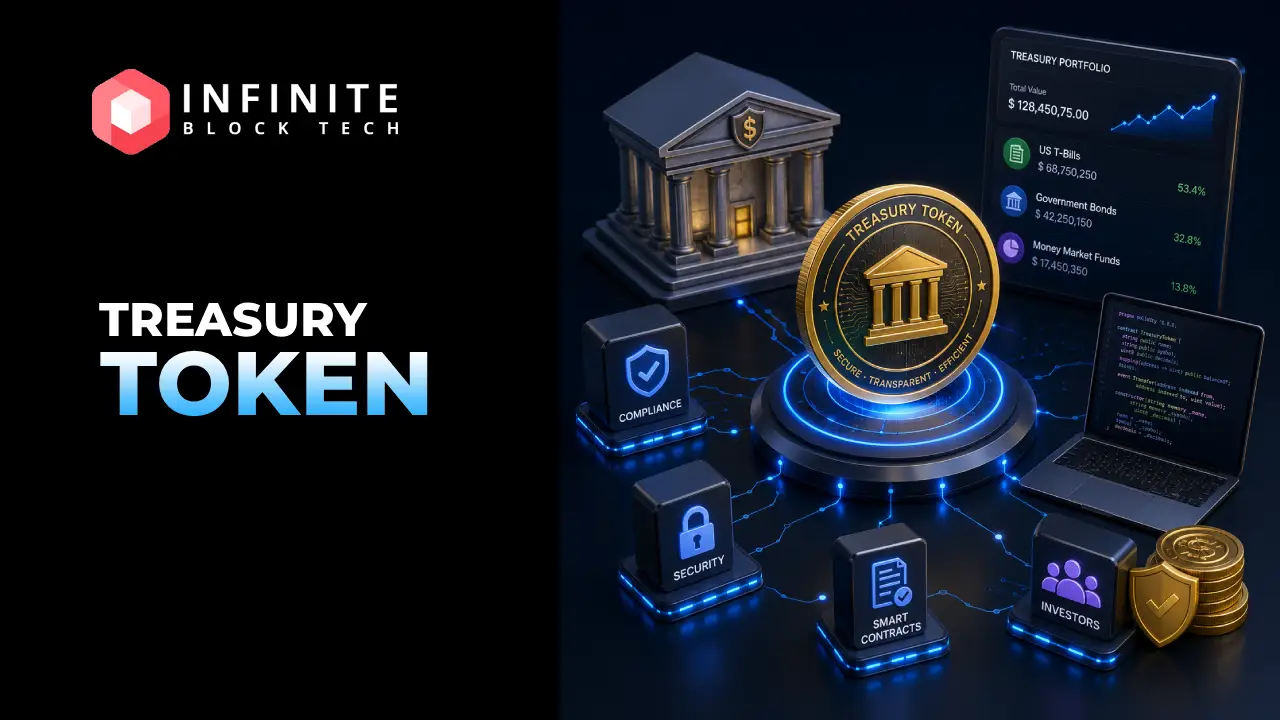
The financial sector is witnessing a significant transformation driven by blockchain technology and asset tokenization. Traditional financial instruments are increasingly being digitized to improve efficiency, accessibility, and transparency. Among the most promising innovations in this space is treasury asset tokenization, which is creating new opportunities for investors, financial institutions, enterprises, and fintech companies.
Treasury assets such as government bonds, treasury bills, and other fixed-income securities have long been regarded as stable investment vehicles. However, traditional treasury markets often involve complex processes, limited accessibility, settlement delays, and high operational costs. Blockchain technology addresses many of these challenges by enabling treasury assets to be represented as digital tokens.
As Real-World Asset (RWA) tokenization gains momentum, tokenized treasury products are attracting substantial attention from institutional investors and blockchain innovators. Industry reports indicate that the tokenized asset market could reach trillions of dollars in value over the next decade, with treasury-backed assets becoming one of the leading segments.
This comprehensive guide explains how Treasury Token Development is reshaping modern finance, the technologies behind it, key benefits, industry applications, and why businesses are increasingly investing in this emerging sector.
What is Treasury Token Development?
Treasury Token Development refers to the process of creating blockchain-based digital tokens that represent ownership, participation rights, or economic interests in treasury-backed financial assets.
These assets may include:
- Government bonds
- Treasury bills
- Sovereign debt instruments
- Money market securities
- Corporate treasury reserves
- Short-term fixed-income products
The objective is to convert traditionally paper-based or centrally managed financial assets into blockchain-powered digital instruments that can be traded, transferred, and managed more efficiently.
How Treasury-Backed Tokens Work
Treasury-backed tokens are linked to underlying treasury assets held by custodians or regulated institutions. Each token represents a specific value or ownership share in those assets.
For example, a government bond worth $10 million could be tokenized into one million digital tokens. Investors can purchase these tokens and gain exposure to the bond’s yield and value without requiring direct ownership of the physical instrument.
Blockchain technology records ownership information while smart contracts automate transactions, compliance checks, and distributions.
Types of Treasury Assets That Can Be Tokenized
Various treasury-related assets can be converted into digital tokens, including:
- Government treasury bills
- Treasury bonds
- Sovereign debt securities
- Corporate treasury holdings
- Cash reserve portfolios
- Institutional money market instruments
- Fixed-income investment products
These assets provide the foundation for creating secure and transparent tokenized investment opportunities.
Evolution of Treasury Asset Tokenization
Traditional Treasury Management
For decades, treasury assets have played an essential role in financial markets. Governments issue bonds and treasury bills to raise capital, while investors use them for stability and predictable returns.
Traditional treasury investments often involve:
- Multiple intermediaries
- Settlement periods lasting several days
- Geographic limitations
- High minimum investment requirements
- Extensive paperwork
These factors can limit accessibility and operational efficiency.
Blockchain Integration into Treasury Markets
Blockchain technology introduced a decentralized and transparent framework for managing financial assets.
Financial institutions began experimenting with distributed ledger systems to:
- Improve settlement efficiency
- Reduce administrative costs
- Increase transparency
- Strengthen security
The integration of blockchain into treasury markets paved the way for digital treasury instruments.
Rise of Real-World Asset Tokenization
The growing adoption of Real-World Asset tokenization has accelerated interest in treasury-backed tokens.
RWA tokenization allows tangible and financial assets to be represented digitally, enabling:
- Fractional ownership
- Enhanced liquidity
- Global investor participation
- Automated compliance
This trend has positioned Treasury Token Development as a major innovation within the broader digital asset ecosystem.
Launch Treasury Token Solutions for Modern Finance
How Treasury Token Development Works
Asset Identification and Verification
The first stage involves selecting treasury assets suitable for tokenization.
Assets undergo detailed evaluation to verify:
- Ownership
- Market value
- Regulatory status
- Risk profile
Independent audits often validate the assets before token issuance.
Legal and Compliance Framework
A robust legal structure ensures that tokenized assets comply with applicable regulations.
Compliance measures typically include:
- KYC verification
- AML procedures
- Securities regulations
- Investor protection mechanisms
Legal clarity helps build trust among participants.
Smart Contract Development
Smart contracts define how tokens operate on the blockchain.
These contracts automate:
- Token issuance
- Ownership transfers
- Interest payments
- Governance functions
- Compliance checks
Automation reduces operational complexity and human error.
Token Creation and Issuance
Digital tokens are generated according to predefined tokenomics and asset backing.
Each token represents a portion of the treasury asset portfolio and is distributed to investors through approved channels.
Asset Custody and Management
Treasury assets remain under the custody of trusted institutions.
Custodians ensure:
- Asset protection
- Regulatory compliance
- Periodic audits
- Accurate reporting
Secondary Market Trading
After issuance, tokens may be traded on approved marketplaces or digital asset exchanges.
This creates liquidity and enables investors to buy or sell holdings efficiently.
Key Features of Treasury Tokens
Asset-Backed Value
Treasury tokens derive value from underlying treasury assets, providing greater stability than speculative digital assets.
Fractional Ownership
Investors can purchase smaller portions of high-value treasury instruments, lowering entry barriers.
Smart Contract Automation
Automated processes improve operational efficiency while reducing administrative costs.
Transparency and Auditability
Blockchain records every transaction permanently, creating an auditable ownership history.
Security Mechanisms
Advanced cryptographic protocols protect assets and transaction records.
Regulatory Compliance
Modern tokenization platforms incorporate compliance frameworks to meet regulatory requirements.
Yield Distribution Systems
Interest payments and returns can be automatically distributed through smart contracts.
Global Accessibility
Tokenized treasury assets can be accessed by investors worldwide, subject to regulatory requirements.
Create Treasury Tokens for Global Investors
Benefits of Treasury Token Development
Improved Liquidity
Traditional treasury assets often have limited liquidity due to market structures and trading restrictions.
Tokenization enables faster and more efficient trading, improving market participation.
Reduced Operational Costs
Blockchain reduces dependence on intermediaries such as brokers, clearing houses, and settlement providers.
This lowers transaction and administrative expenses.
Faster Settlements
Traditional financial transactions may require several business days for settlement.
Blockchain networks can significantly shorten settlement times.
Institutional Accessibility
Institutional investors gain access to transparent and efficient treasury investment vehicles.
Portfolio Diversification
Tokenized treasury products offer diversification opportunities within digital asset portfolios.
Enhanced Transparency
Every transaction is recorded on-chain, providing visibility into ownership and asset movement.
Cross-Border Investment Opportunities
Investors can participate in treasury markets across geographic regions more easily.
Investor Confidence
Asset-backed structures and transparent reporting increase trust among market participants.
These advantages make Treasury Token Development attractive for both institutional and retail investors.
Treasury Token Standards and Blockchain Networks
ERC-20
ERC-20 remains one of the most widely used token standards for treasury token issuance.
Benefits include:
- Broad compatibility
- Wallet support
- Exchange integration
ERC-3643
ERC-3643 focuses on permissioned tokenization and compliance management.
It is particularly useful for regulated financial assets.
ERC-1400
ERC-1400 is designed specifically for security tokens and regulated asset offerings.
It supports advanced compliance requirements and transfer restrictions.
Ethereum
Ethereum remains a leading blockchain platform due to its mature ecosystem and smart contract capabilities.
Polygon
Polygon offers lower transaction costs and high scalability while maintaining Ethereum compatibility.
Solana
Solana provides high-speed transaction processing and cost efficiency.
Avalanche
Avalanche supports enterprise-grade applications with strong scalability and security.
Permissioned Blockchain Networks
Many institutions prefer permissioned networks that provide greater control, privacy, and compliance features.
Use Cases of Treasury Token Development
Government Bond Tokenization
Governments can digitize bond issuance processes and improve investor accessibility.
Treasury Bill Tokenization
Short-term treasury securities can be converted into tradable digital assets.
Corporate Treasury Management
Businesses can tokenize treasury reserves to improve capital efficiency and liquidity management.
Institutional Investment Products
Asset managers can create innovative treasury-backed investment products.
Stable Yield Investment Platforms
Treasury-backed tokens can provide predictable returns through yield-generating structures.
Digital Securities Markets
Tokenized treasury assets contribute to the development of modern digital securities ecosystems.
Cross-Border Treasury Investments
Investors gain access to treasury markets beyond their domestic jurisdictions.
These applications demonstrate the growing importance of Treasury Token Development across financial markets.
Treasury Token Development Process
Market Research
Businesses must assess market demand, target users, and competitive dynamics.
Business Planning
A comprehensive strategy defines objectives, token economics, and growth plans.
Regulatory Analysis
Legal teams evaluate compliance requirements in relevant jurisdictions.
Blockchain Selection
Choosing the right blockchain depends on scalability, security, transaction costs, and ecosystem support.
Smart Contract Development
Developers create and test smart contracts that govern token functionality.
Security Auditing
Independent audits identify vulnerabilities before deployment.
Platform Integration
Treasury tokens are integrated with wallets, exchanges, compliance tools, and custody systems.
Token Launch
Following testing and regulatory approval, tokens are issued to investors and participants.
A structured Treasury Token Development process helps ensure long-term project success.
Security Considerations
Smart Contract Audits
Regular audits help identify vulnerabilities and coding errors.
Asset Custody Protection
Secure custody arrangements protect underlying treasury assets.
Multi-Signature Wallets
Multi-signature systems reduce the risk of unauthorized transactions.
Compliance Monitoring
Ongoing monitoring ensures adherence to evolving regulations.
Risk Management Strategies
Organizations should establish frameworks for:
- Operational risk
- Market risk
- Regulatory risk
- Cybersecurity risk
Strong security practices are essential for maintaining investor trust.
Challenges in Treasury Token Development
Regulatory Uncertainty
Regulations surrounding digital assets continue to evolve globally.
Market Adoption Barriers
Many investors and institutions remain unfamiliar with tokenized treasury products.
Custodial Risks
Secure management of underlying assets remains a critical requirement.
Technology Integration Challenges
Organizations may face difficulties integrating blockchain systems with existing infrastructure.
Liquidity Concerns
Developing active secondary markets is essential for long-term success.
Addressing these challenges will be crucial for broader industry adoption.
Future Trends in Treasury Token Development
Institutional Adoption
Banks, asset managers, and investment firms are increasingly entering tokenized asset markets.
AI-Powered Treasury Management
Artificial intelligence is improving portfolio management, risk analysis, and treasury operations.
Tokenized Government Securities
Governments worldwide are evaluating blockchain-based bond issuance models.
On-Chain Capital Markets
Financial markets are gradually moving toward blockchain-powered infrastructure.
RWA Ecosystem Growth
The broader Real-World Asset ecosystem continues expanding as more traditional assets become tokenized.
Decentralized Finance Integration
Treasury-backed assets are increasingly being integrated into DeFi protocols.
These developments suggest that Treasury Token Development will play a major role in future financial systems.
Why Businesses Should Invest in Treasury Token Development
Revenue Opportunities
Tokenization creates new products, services, and investment opportunities.
Competitive Advantage
Early adopters can establish leadership positions within emerging digital asset markets.
Digital Transformation Benefits
Blockchain improves efficiency, transparency, and operational performance.
Long-Term Market Potential
Industry forecasts indicate substantial growth in tokenized financial assets over the coming decade.
Financial institutions, startups, and enterprises that embrace Treasury Token Development today can position themselves to benefit from this expanding market.
Conclusion
Treasury asset tokenization represents one of the most significant innovations in modern finance. By converting traditional treasury instruments into blockchain-based digital assets, organizations can improve liquidity, transparency, accessibility, and operational efficiency.
From government bonds and treasury bills to institutional investment products and digital securities markets, tokenized treasury assets are creating new opportunities for investors and businesses alike. The combination of blockchain technology, smart contracts, and regulatory frameworks is enabling a more efficient and inclusive financial ecosystem.
As institutional adoption accelerates, Real-World Asset tokenization expands, and on-chain capital markets mature, Treasury Token Development is expected to become a foundational component of digital finance. Businesses that invest in this technology today can gain a strategic advantage, create innovative financial products, and participate in the next generation of global financial infrastructure.