

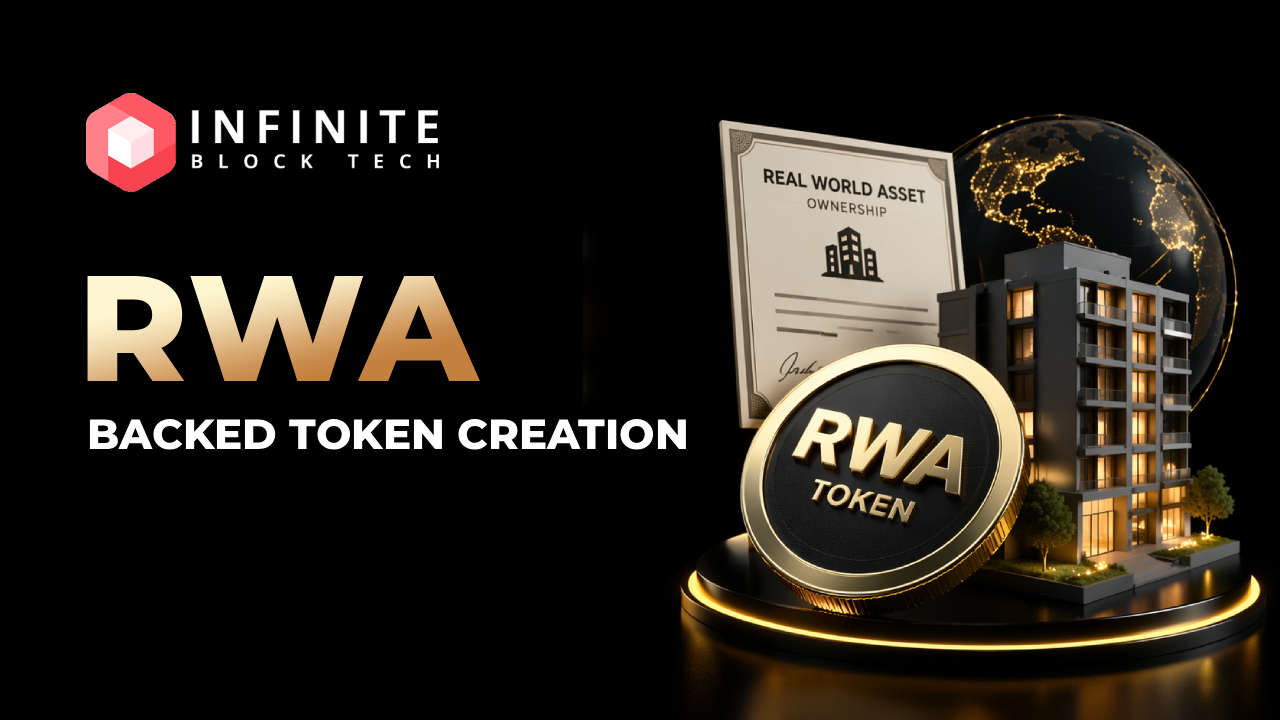
Blockchain has come a long way from being just about cryptocurrencies. What started with digital coins has now moved into something much more grounded in reality. One of the most talked-about shifts today is RWA-backed token creation, where physical and financial assets are represented on the blockchain as digital tokens.
If you have ever wondered how real estate, gold, or even invoices could exist in a digital format and be traded globally, this is exactly what real-world asset tokenization is about. It connects traditional finance with blockchain in a practical and meaningful way.
This blog breaks down the concept in a simple and relatable manner. Whether you are an investor, entrepreneur, or just curious about crypto, this guide will help you understand how RWA crypto tokens are changing investment opportunities.
What Are RWA-Backed Tokens?
RWA stands for Real-World Assets. These are tangible or financial assets that exist outside the blockchain. Examples include:
- Real estate properties
- Precious metals like gold or silver
- Bonds and treasury bills
- Art and collectibles
- Company shares
- Loans and invoices
When these assets are converted into digital tokens on a blockchain, they become RWA tokens in crypto. Each token represents ownership or a share of the underlying asset.
For example, instead of buying an entire property, you can own a fraction of it through tokens. This lowers the entry barrier and opens the door for more people to participate.
Why RWA-Backed Token Creation Is Gaining Attention
Traditional investments often come with limitations. They may require large capital, involve complex paperwork, or restrict access based on location. RWA-backed token creation changes this by making assets more accessible and easier to manage.
Here are a few reasons why this approach is gaining traction:
1. Fractional Ownership
High-value assets like real estate are no longer limited to wealthy investors. Tokenization allows assets to be divided into smaller units, so more people can invest with lower capital.
2. Improved Liquidity
Selling physical assets usually takes time. With RWA tokenization, tokens can be traded on digital platforms, making it easier to buy and sell without long waiting periods.
3. Global Access
Investors from different parts of the world can participate without geographical barriers. This creates a more inclusive investment environment.
4. Transparency
Blockchain records transactions in a way that is visible and verifiable. This reduces the chances of fraud and builds trust among participants.
How Real-World Asset Tokenization Works
The process of real-world asset tokenization involves several steps. While the technology behind it may seem complex, the overall flow is quite straightforward.
Step 1: Asset Selection
An asset is chosen for tokenization. This could be a property, commodity, or financial instrument.
Step 2: Legal Structuring
Ownership rights and compliance requirements are defined. This step ensures that the token represents a legally valid claim.
Step 3: Digitization
The asset is converted into digital tokens using blockchain technology. Each token represents a portion of the asset.
Step 4: Platform Listing
The tokens are listed on a platform where investors can buy, sell, or trade them.
Step 5: Ongoing Management
The asset continues to generate value, such as rental income or interest, which can be distributed to token holders.
This entire flow forms the backbone of RWA token development.
Types of Assets Used in RWA Tokenization
RWA tokenization is not limited to one type of asset. It can be applied across various sectors, each offering unique opportunities.
Real Estate
This is one of the most common use cases. Properties are divided into tokens, allowing investors to earn rental income or benefit from price appreciation.
Commodities
Gold, silver, and other commodities can be tokenized and traded digitally, making them easier to access and store.
Financial Assets
Bonds, stocks, and funds can be represented as tokens, providing new ways to invest in traditional markets.
Art and Collectibles
Rare items like paintings or vintage collectibles can be tokenized, allowing shared ownership.
Debt Instruments
Loans and invoices can be converted into tokens, enabling faster financing and better cash flow management.
Benefits for Investors
RWA crypto tokens offer several advantages that make them appealing to both new and experienced investors.
Lower Entry Barriers
You no longer need large sums of money to invest in high-value assets.
Diversification
Investors can spread their funds across different asset classes, reducing risk.
Faster Transactions
Blockchain enables quicker settlements compared to traditional systems.
Passive Income Opportunities
Token holders can earn income from assets such as rental properties or interest-bearing instruments.
Benefits for Businesses and Asset Owners
It is not just investors who benefit. Businesses and asset owners also gain from RWA-backed token creation.
Access to Capital
Tokenization provides a new way to raise funds without relying solely on banks or traditional investors.
Wider Investor Base
Assets can be offered to a global audience, increasing funding opportunities.
Efficient Operations
Automated processes reduce paperwork and administrative tasks.
Challenges to Consider
While RWA tokenization has many benefits, it is not without challenges.
Regulatory Uncertainty
Different countries have different rules regarding digital assets. Navigating these regulations can be complex.
Valuation Issues
Determining the accurate value of an asset is important to maintain investor confidence.
Technology Risks
Smart contract vulnerabilities or platform issues can pose risks.
Market Adoption
Although interest is growing, widespread adoption is still in progress.
Understanding these challenges is important for anyone planning to launch RWA token projects.
Steps to Launch RWA Token Successfully
If you are planning to launch the RWA token, a clear strategy is essential. Here is a practical roadmap:
Define the Asset
Choose an asset that has clear value and demand.
Conduct Legal Checks
Work with legal experts to ensure compliance with local regulations.
Choose the Right Blockchain
Select a blockchain that supports tokenization and offers reliability.
Develop Smart Contracts
Smart contracts manage token issuance and transactions. This is a key part of RWA token development.
Build a Platform
To attract investors, you may need to build an RWA token platform where users can easily interact with the tokens.
Marketing and Community Building
Educating potential investors and building trust play a big role in success.
The Role of Technology in RWA Token Development
Technology is at the heart of this system. Some of the key components include:
Blockchain Networks
They provide the infrastructure for storing and transferring tokens.
Smart Contracts
These automate processes such as ownership transfer and profit distribution.
Oracles
They connect real-world data with blockchain systems, ensuring accuracy.
Security Systems
Protecting assets and user data is critical in any tokenized environment.
Real-Life Examples of RWA Tokens
To understand the concept better, let us look at a few real-world applications:
- Real estate platforms offering fractional property ownership
- Gold-backed tokens that represent physical gold stored in vaults
- Tokenized government bonds accessible to retail investors
- Platforms that tokenize invoices for quicker financing
These examples show how RWA tokens in crypto are being used in practical scenarios.
The Future of RWA Tokens in Crypto
The future of RWA tokens in crypto looks promising. As more industries begin to adopt tokenization, the gap between traditional finance and blockchain continues to shrink.
We are likely to see:
- Increased participation from institutional investors
- Better regulatory frameworks
- More user-friendly platforms
- Expansion into new asset classes
This gradual shift indicates that tokenization is not just a passing trend but a meaningful evolution in how investments work.
Why Businesses Are Moving Toward RWA Tokenization
Businesses are recognizing the value of tokenizing assets. It offers flexibility, access to funding, and improved efficiency.
For startups and enterprises alike, RWA tokenization provides a way to modernize operations while reaching a wider audience.
Whether it is a real estate company, a commodity trader, or a financial institution, the potential applications are vast.
Building a Sustainable RWA Token Ecosystem
Creating a successful token is not just about technology. It requires a balanced approach that includes:
- Legal compliance
- Transparent communication
- Reliable technology
- Strong community engagement
When all these elements come together, it becomes easier to build an RWA token platform that attracts and retains investors.
Conclusion
RWA-backed token creation is bringing real-world value into the digital space in a practical and accessible way. Turning physical and financial assets into digital tokens, it opens up opportunities for both investors and businesses.
From fractional ownership to global accessibility, the advantages are clear. At the same time, understanding the challenges and planning carefully is important for long-term success.
As adoption grows, RWA crypto tokens are likely to become a regular part of investment strategies. Whether you are looking to invest or planning to create your own token, now is a good time to understand how this space works.
In the end, real-world asset tokenization is not just about technology. It is about making investments more inclusive, flexible, and aligned with how people want to manage their assets today.