

Blockchain technology has grown far beyond its early days. Today, hundreds of blockchain networks support decentralized applications, digital assets, gaming platforms, financial services, and enterprise solutions. While this growth has created more opportunities, it has also introduced a major challenge: interoperability.
Most blockchain networks operate independently, making it difficult for users and businesses to move assets between them. A token created on one blockchain often cannot interact directly with another blockchain without additional mechanisms. This limitation can affect user experience, liquidity, and adoption.
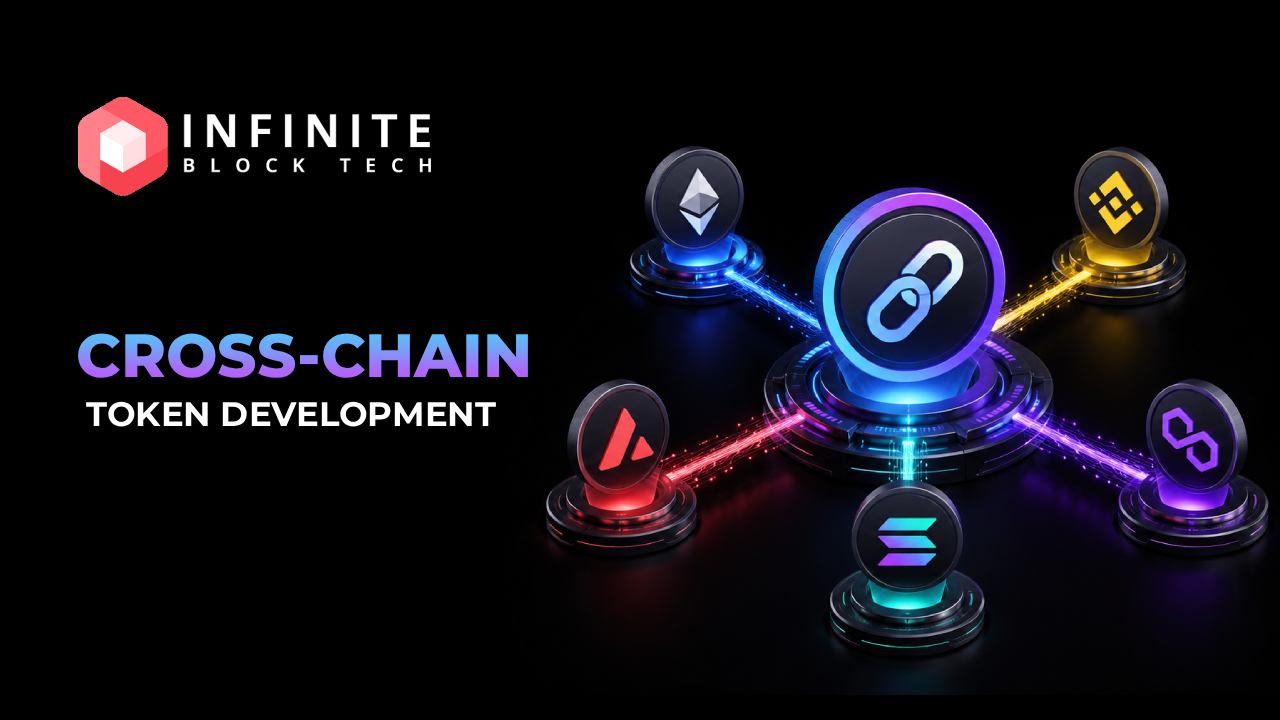
This is where Cross-chain token development comes into the picture. By enabling tokens to move across multiple blockchain networks, businesses can create more accessible ecosystems and provide users with greater flexibility. Whether it is decentralized finance, gaming, NFT marketplaces, or enterprise applications, cross-chain functionality is becoming increasingly important for projects that want to reach a wider audience.
In this article, we will discuss what cross-chain tokens are, how they work, their benefits, development process, use cases, challenges, and the Cost of cross-chain token development.
What Are Cross-Chain Tokens?
A cross-chain token is a digital asset that can exist and operate across multiple blockchain networks. Instead of being limited to a single blockchain, these tokens can be transferred, utilized, and managed across different ecosystems.
For example, a token created on Ethereum may also be accessible on BNB Chain, Polygon, Avalanche, or other networks. Users can move their assets between chains without losing ownership or value.
Traditional tokens are often restricted to the blockchain where they were initially deployed. This creates isolated ecosystems and can limit market reach. Cross-chain tokens address this issue by allowing communication and asset movement between separate blockchains.
As blockchain adoption grows, Cross-chain crypto token development is becoming a preferred approach for businesses looking to expand accessibility and improve user engagement.
Why Interoperability Matters
The blockchain industry consists of numerous networks, each offering different advantages. Ethereum is known for its extensive developer community, Polygon offers lower transaction costs, while Avalanche provides faster transaction processing.
Without interoperability, users may need to maintain separate assets on different chains, resulting in complexity and inconvenience. Cross-chain functionality helps bridge these gaps by creating a connected environment where assets can move freely between supported networks.
Interoperability offers several advantages:
- Increased asset liquidity
- Wider user participation
- Better accessibility
- Reduced dependency on a single blockchain
- Improved ecosystem collaboration
- Enhanced flexibility for developers and businesses
These benefits explain why Cross-chain blockchain development is receiving significant attention across the blockchain industry.
How Cross-Chain Tokens Work
Cross-chain tokens rely on interoperability protocols, bridges, and smart contracts that facilitate communication between blockchains.
The general process involves the following steps:
Asset Locking
When a user wants to transfer tokens from Blockchain A to Blockchain B, the original tokens are locked in a smart contract or bridge on Blockchain A.
Verification
The bridge verifies that the tokens have been locked successfully.
Token Minting
Once verification is complete, an equivalent number of tokens is minted on Blockchain B.
Asset Usage
The user can now use the newly minted tokens on Blockchain B.
Redeeming Assets
If the user wants to return to the original blockchain, the tokens on Blockchain B are burned, and the locked assets on Blockchain A are released.
This process maintains the token supply and prevents duplication.
Cross-chain token smart contract development plays a critical role in managing these operations securely and accurately.
Key Technologies Behind Cross-Chain Token Development
Several technologies support cross-chain functionality.
Blockchain Bridges
Bridges connect two or more blockchain networks, allowing tokens and data to move between them.
Examples include:
- Ethereum to Polygon bridges
- Ethereum to Avalanche bridges
- BNB Chain interoperability bridges
Bridges act as intermediaries that verify transactions and maintain token consistency across networks.
Smart Contracts
Smart contracts automate token transfers, locking, minting, burning, and verification processes.
Reliable Cross-chain token smart contract development is necessary to prevent errors and reduce security risks.
Interoperability Protocols
Protocols such as Cosmos IBC and Polkadot provide frameworks that enable communication between different blockchains.
These protocols allow multiple chains to exchange information while maintaining their independent operations.
Oracles and Validators
Oracles and validator networks help verify transactions and communicate information between chains.
They provide additional trust mechanisms that support cross-chain transfers.
Benefits of Cross-Chain Token Development
Businesses and blockchain projects can gain several advantages from implementing cross-chain functionality.
Broader Market Reach
A token available across multiple blockchain networks can attract users from different communities.
Instead of relying on a single blockchain ecosystem, projects can reach a much larger audience.
Improved Liquidity
Cross-chain tokens can access liquidity pools across various networks.
Greater liquidity often contributes to better trading opportunities and market participation.
Enhanced User Experience
Users can choose their preferred blockchain based on transaction fees, speed, and available applications.
This flexibility improves convenience and encourages adoption.
Reduced Network Dependency
Projects that depend entirely on one blockchain may face challenges if network congestion or high transaction fees occur.
Cross-chain support allows users to access alternative networks when needed.
Better Ecosystem Integration
Cross-chain assets can participate in decentralized finance applications, NFT marketplaces, gaming platforms, and other blockchain services across multiple ecosystems.
This creates more opportunities for token utility.
Multi-Chain Token Development vs Cross-Chain Token Development
Although these terms are often used interchangeably, they are not exactly the same.
Multi-chain token development refers to deploying a token on multiple blockchain networks independently. The token exists on different chains but may not automatically transfer between them.
Cross-chain token development goes further by enabling direct asset movement and interaction between supported blockchains.
For example:
- A multi-chain token may exist on Ethereum and Polygon separately.
- A cross-chain token can move from Ethereum to Polygon through a bridge mechanism.
Many projects combine both approaches to maximize accessibility and interoperability.
As blockchain ecosystems become more interconnected, Multi-chain token development and cross-chain functionality are increasingly being implemented together.
Industries Using Cross-Chain Tokens
Cross-chain technology is influencing various industries.
Decentralized Finance (DeFi)
DeFi platforms often rely on liquidity from multiple blockchains.
Cross-chain tokens help users access lending, borrowing, staking, and trading services across different ecosystems.
Gaming
Blockchain games frequently operate across several networks.
Players can transfer in-game assets and tokens between chains, creating more flexible gaming experiences.
NFT Platforms
NFT marketplaces benefit from cross-chain support by enabling users to trade assets across different blockchain environments.
Enterprise Solutions
Businesses can use cross-chain tokens for supply chain management, digital identity systems, and cross-platform asset tracking.
Payment Systems
Cross-chain functionality can improve digital payment solutions by supporting transfers across multiple blockchain networks.
🚀 Build Cross-Chain Tokens That Move Without Limits
Development Process for Cross-Chain Tokens
Building a cross-chain token requires careful planning and technical expertise.
Requirement Analysis
The first step is identifying project goals, supported blockchains, user requirements, and intended use cases.
Development teams evaluate factors such as transaction volume, security needs, and integration requirements.
Blockchain Selection
Choosing compatible blockchain networks is essential.
Popular options include:
- Ethereum
- Polygon
- BNB Chain
- Avalanche
- Arbitrum
- Optimism
- Solana
The selection depends on project objectives and target audiences.
Token Design
Developers define token standards, supply mechanisms, governance structures, and interoperability requirements.
Smart Contract Development
Cross-chain token smart contract development includes:
- Token creation
- Minting functions
- Burning functions
- Locking mechanisms
- Transfer validation
- Security controls
Well-designed smart contracts form the foundation of the entire system.
Bridge Integration
The token must connect with interoperability solutions or blockchain bridges.
Bridge integration enables communication between selected networks.
Testing and Security Audits
Comprehensive testing is necessary before deployment.
Security audits help identify vulnerabilities and reduce risks associated with token transfers.
Deployment
After successful testing, the token and supporting infrastructure are deployed across target blockchain networks.
Ongoing Maintenance
Blockchain ecosystems evolve continuously.
Regular updates, monitoring, and maintenance help maintain performance and compatibility.
Many businesses choose professional Cross-chain token creation services to manage these complex development stages.
Security Considerations in Cross-Chain Development
Security remains one of the most important aspects of cross-chain projects.
Since assets move between multiple networks, vulnerabilities can emerge if systems are not properly designed.
Common risks include:
- Bridge exploits
- Smart contract vulnerabilities
- Validator manipulation
- Communication failures
- Token duplication attacks
To minimize these risks, projects should focus on:
- Independent security audits
- Multi-signature controls
- Continuous monitoring
- Thorough testing
- Secure bridge architecture
Experienced providers specializing in Cross-chain blockchain development typically implement multiple layers of security throughout the development lifecycle.
Challenges of Cross-Chain Token Development
Despite its advantages, cross-chain implementation presents several challenges.
Technical Complexity
Managing communication between different blockchain architectures requires specialized expertise.
Security Risks
Cross-chain bridges have historically been targeted by attackers due to the value they manage.
Compliance Considerations
Projects operating across multiple regions may face varying regulatory requirements.
Maintenance Requirements
Cross-chain systems often require ongoing updates as supported blockchains evolve.
Network Compatibility
Each blockchain has unique technical specifications that must be considered during development.
Understanding these challenges helps organizations prepare realistic development plans and allocate appropriate resources.
Cost of Cross-Chain Token Development
The Cost of cross-chain token development depends on several factors.
Number of Supported Blockchains
Supporting two blockchains generally costs less than supporting five or more networks.
Smart Contract Complexity
Advanced token logic, governance features, staking systems, and interoperability functions increase development effort.
Security Audits
Comprehensive auditing adds to project expenses but significantly improves reliability.
Bridge Integration
The complexity of bridge infrastructure influences development costs.
Custom Features
Additional features such as governance modules, rewards systems, analytics dashboards, and administrative controls can affect the final budget.
Development Team Expertise
Experienced blockchain developers may charge higher rates, but they often reduce technical risks and improve project quality.
In most cases, businesses should view cross-chain development as a long-term investment that supports broader market access and improved user engagement.
Choosing the Right Development Partner
Selecting the right development team is an important decision.
Consider the following factors:
- Experience with multiple blockchain networks
- Smart contract development expertise
- Security audit capabilities
- Bridge integration experience
- Portfolio of completed projects
- Technical support services
Reliable Cross-chain token creation services can help businesses navigate technical challenges and bring their projects to market efficiently.
The Future of Cross-Chain Tokens
As blockchain adoption continues to expand, interoperability is becoming increasingly important. Users expect digital assets to move freely between platforms without unnecessary restrictions.
Emerging interoperability frameworks, decentralized bridge solutions, and standardized communication protocols are contributing to a more connected blockchain environment.
Projects that adopt Cross-chain crypto token development early can position themselves to serve users across multiple ecosystems rather than limiting participation to a single network.
Cross-chain functionality is likely to become a standard feature for many blockchain applications in the coming years, particularly in decentralized finance, gaming, NFTs, and enterprise platforms.
Conclusion
Blockchain technology has introduced numerous networks, each with unique strengths and communities. However, the inability of these networks to communicate efficiently has created barriers for users and businesses alike.
Cross-chain token development addresses this challenge by enabling digital assets to move between multiple blockchain ecosystems. Through bridges, interoperability protocols, and secure smart contracts, projects can provide greater flexibility, improved liquidity, and broader accessibility.
Whether supporting decentralized finance platforms, gaming ecosystems, NFT marketplaces, or enterprise applications, cross-chain functionality is becoming an important component of modern blockchain projects.
Organizations considering Cross-chain blockchain development should focus on security, interoperability, and long-term sustainability. With proper planning and implementation, Multi-chain token development and cross-chain capabilities can help create a more connected and user-friendly blockchain experience for participants across different networks.