

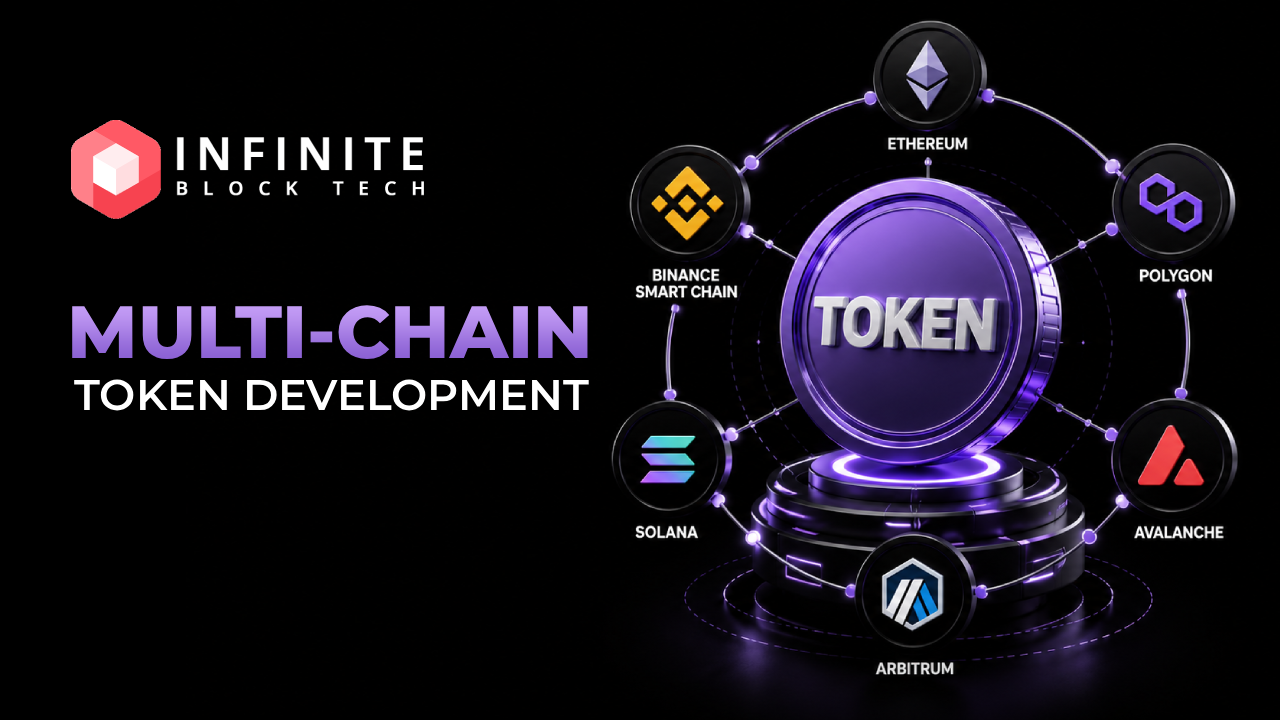
Blockchain technology has changed the way digital assets are created, stored, and exchanged. In the early days, most crypto tokens were built on a single blockchain network. Ethereum became the preferred option for token creation, while networks like Binance Smart Chain, Solana, Polygon, Avalanche, and Tron later entered the market with their own advantages.
As the blockchain industry matured, businesses and startups started facing one major challenge. A token built on one network often struggles to interact with users from another network. This creates limitations in accessibility, trading, liquidity, and adoption.
This is where Multi-Chain Token Development becomes important. Instead of restricting a token to one blockchain, businesses are now creating tokens that can operate across multiple blockchain ecosystems. This approach helps projects reach larger audiences while improving flexibility and usability.
Today, companies across gaming, DeFi, NFTs, supply chain, healthcare, and fintech are investing in multi-chain strategies because users no longer want to stay within a single blockchain environment. They expect freedom to move assets between networks without difficulty.
In this blog, we will discuss how multi-chain token systems work, why they matter, their benefits, the development process, use cases, challenges, and why they are becoming a preferred option for modern blockchain businesses.
Understanding Multi-Chain Token Development
Multi-Chain Token Development refers to the process of creating crypto tokens that function across multiple blockchain networks instead of being limited to a single chain.
For example, a token may exist on Ethereum, Binance Smart Chain, Polygon, and Solana simultaneously. Users can transfer, trade, or use the token within different ecosystems based on their preferences.
Traditional single-chain tokens often create barriers because each blockchain has unique transaction fees, processing speed, and community support. A multi-chain approach removes these restrictions and gives users more freedom.
Businesses prefer this model because it improves accessibility and helps attract users from multiple blockchain communities.
A multi-chain token system generally includes:
- Smart contracts on multiple blockchains
- Cross-chain bridges
- Interoperability protocols
- Wallet integration
- Liquidity synchronization
- Security verification mechanisms
This model is becoming a major part of blockchain expansion because users want convenience, lower transaction fees, and broader compatibility.
Why Businesses Are Moving Toward Multi-Blockchain Systems
The blockchain market has become highly diverse. Ethereum remains popular, but other networks have built large ecosystems with active communities.
Each blockchain offers unique advantages:
- Ethereum provides security and a large developer community
- Solana offers high transaction speed
- Polygon reduces transaction costs
- Binance Smart Chain supports fast and affordable transactions
- Avalanche focuses on efficiency and low latency
Relying on a single blockchain means missing opportunities available on other networks. This is why companies are adopting Multi-Blockchain Token Solutions to increase visibility and improve user engagement.
Businesses now understand that users prefer flexibility. Some users trade on Ethereum while others participate in DeFi applications on Polygon or Binance Smart Chain. A multi-chain token allows all these users to interact with the same asset without restrictions.
This strategy also reduces dependency on one network. If congestion or high gas fees affect one blockchain, users can continue transactions through another supported network.
How Cross-Chain Token Systems Work
Cross-chain functionality allows tokens to move between different blockchain ecosystems.
In a Cross-Chain Token Development model, the token can either be:
- Wrapped and transferred between chains
- Minted and burned across chains
- Managed through liquidity pools and interoperability protocols
Here’s a simple example:
- A user holds a token on Ethereum
- They want to use it on Polygon
- A bridge locks the Ethereum token
- An equivalent token is issued on Polygon
- The user can now use the token within the Polygon ecosystem
This process allows token interoperability while maintaining supply balance.
Cross-chain bridges and interoperability protocols play a major role in this system. Popular technologies include:
- LayerZero
- Wormhole
- Polkadot
- Cosmos IBC
- Chainlink CCIP
These systems help blockchains communicate with each other efficiently.
Advantages of Multi-Chain Token Development
Wider User Reach
One of the biggest advantages of Multi-Chain Token Development is access to users from multiple blockchain ecosystems.
A token available only on Ethereum may not attract users from Solana or Binance Smart Chain communities. Multi-chain support removes this limitation.
This wider accessibility improves token adoption and market exposure.
Lower Transaction Costs
Gas fees vary significantly between blockchains. Ethereum fees may become expensive during periods of high network activity.
Multi-chain systems allow users to choose lower-cost networks such as Polygon or Binance Smart Chain for transactions.
This improves user experience and encourages more participation.
Improved Liquidity
Liquidity is important for token success. When a token is available on multiple chains, it gains access to liquidity pools across different decentralized exchanges.
This increases trading opportunities and market activity.
Better Risk Distribution
Single-chain projects depend entirely on one blockchain network. If the network experiences downtime, congestion, or security concerns, the project suffers.
Multi-chain systems distribute operations across several networks, reducing dependency risks.
More Integration Opportunities
Different blockchain ecosystems support different applications.
For example:
- Ethereum dominates DeFi
- Solana has strong gaming projects
- Polygon supports NFT marketplaces
- Binance Smart Chain has large retail adoption
A multi-chain token can participate in all these ecosystems simultaneously.
Industries Using Multi-Network Token Development
Many industries are already benefiting from Multi-Network Token Development.
Decentralized Finance (DeFi)
DeFi projects use multi-chain systems to improve lending, borrowing, staking, and liquidity management across networks.
Users can access financial services from different ecosystems without changing platforms.
Gaming
Blockchain gaming projects use multi-chain systems to support in-game assets across multiple marketplaces and blockchain networks.
Players can move gaming assets between ecosystems more easily.
NFT Platforms
NFT marketplaces benefit from multi-chain compatibility because creators and collectors use different blockchain networks.
This increases marketplace participation and transaction volume.
Supply Chain
Supply chain projects use blockchain networks for tracking and transparency. Multi-chain systems help companies integrate operations across different blockchain environments.
Healthcare
Healthcare systems can use blockchain for patient records and secure data sharing. Multi-chain support improves interoperability between institutions using different blockchain infrastructures.
The Development Process Behind Multi-Chain Tokens
Creating a successful multi-chain token requires proper planning and technical execution.
Requirement Analysis
The first step involves identifying:
- Target audience
- Blockchain networks
- Token utility
- Transaction requirements
- Security expectations
Choosing the right networks is critical because each blockchain offers different features.
Token Standard Selection
Developers choose token standards based on the selected blockchains.
Examples include:
- ERC-20 for Ethereum
- BEP-20 for Binance Smart Chain
- SPL for Solana
- TRC-20 for Tron
The token structure must remain compatible across networks.
Smart Contract Development
Smart contracts are developed separately for each blockchain.
These contracts manage:
- Token minting
- Burning
- Transfers
- Supply synchronization
- Cross-chain functionality
Security is very important during this stage.
Bridge Integration
Cross-chain bridges connect blockchain networks and enable asset transfers.
Bridge integration helps maintain token balance across chains.
Wallet and Exchange Support
The token must work with popular wallets and exchanges.
This improves accessibility for users and traders.
Testing and Auditing
Security testing is mandatory before launch.
Smart contracts undergo:
- Vulnerability analysis
- Penetration testing
- Stress testing
- Third-party audits
This reduces risks associated with hacks and exploits.
Deployment and Maintenance
After deployment, developers monitor network performance and security while providing updates when necessary.
Challenges in Cross-Platform Token Creation
Although multi-chain systems offer many advantages, they also come with technical challenges.
Security Risks
Cross-chain bridges are common targets for cyberattacks.
A weak bridge can lead to massive financial losses. This is why security audits and monitoring are necessary.
Complex Development
Managing multiple blockchain networks increases technical complexity.
Developers must understand different programming languages, consensus mechanisms, and token standards.
Liquidity Fragmentation
Maintaining liquidity across several blockchains can become difficult if not managed properly.
Projects need effective liquidity strategies to avoid market imbalance.
Regulatory Concerns
Blockchain regulations differ across regions.
Businesses launching multi-chain tokens must consider legal compliance and taxation requirements.
The Role of Interoperability in Blockchain Growth
Interoperability is becoming one of the most important topics in blockchain development.
Users no longer want isolated blockchain ecosystems. They expect applications and assets to move freely between networks.
Cross-Chain Token Development supports this demand by connecting fragmented blockchain environments.
Projects focusing on interoperability often attract more users because they reduce restrictions and improve convenience.
As blockchain adoption grows, interoperability may become a standard requirement rather than an optional feature.
Why Startups Prefer Multi-Chain Strategies
Startups entering the blockchain market face heavy competition. Multi-chain support gives them better opportunities to stand out.
Benefits include:
- Faster community growth
- Better liquidity access
- More exchange listing opportunities
- Lower user acquisition barriers
- Improved flexibility
A startup planning to Launch Multi-Chain Token systems can target several blockchain communities simultaneously rather than relying on a single ecosystem.
This increases the chances of project visibility and adoption.
Future Trends in Multi-Chain Crypto Token Launch
The future of blockchain development is moving toward interconnected ecosystems.
Several trends are shaping the future of Multi-Chain Crypto Token Launch projects.
AI and Blockchain Integration
Artificial intelligence may improve cross-chain transaction verification and fraud detection.
AI systems can also optimize liquidity management across multiple blockchains.
More Interoperability Protocols
New interoperability protocols are entering the market to simplify communication between chains.
These protocols aim to reduce transaction delays and bridge vulnerabilities.
Enterprise Blockchain Adoption
Large enterprises are beginning to use blockchain technology for business operations.
Many companies prefer multi-chain systems because they provide flexibility and compatibility.
Growth of Layer 2 Networks
Layer 2 solutions like Arbitrum and Optimism are gaining popularity due to lower transaction costs.
Future multi-chain tokens will likely support both Layer 1 and Layer 2 ecosystems.
Better User Experience
Wallets and decentralized applications are becoming easier to use.
Users may soon interact with multiple blockchains without even noticing which network they are using.
Key Features Businesses Should Look For
When planning Cross-Platform Token Creation, businesses should focus on several important features.
Security Infrastructure
Security should always remain a top priority.
Projects should implement:
- Multi-signature authentication
- Smart contract audits
- Real-time monitoring
- Secure bridge systems
Network Compatibility
The token should support multiple major blockchains for wider adoption.
Fast Transactions
Users prefer blockchain systems with minimal delays.
Efficient transaction processing improves user satisfaction.
Easy Wallet Integration
Support for popular wallets improves accessibility and convenience.
Liquidity Management
A proper liquidity strategy is important for maintaining stable trading activity.
Choosing the Right Development Partner
The success of a multi-chain project often depends on the development team behind it.
Businesses should evaluate:
- Blockchain expertise
- Smart contract experience
- Security practices
- Cross-chain integration capabilities
- Post-launch support
An experienced blockchain development company can help businesses avoid technical mistakes and security issues.
The team should also understand evolving interoperability technologies and blockchain standards.
Conclusion
Blockchain technology is no longer limited to isolated networks. Users expect flexibility, accessibility, and compatibility across multiple ecosystems. This shift has increased demand for Multi-Chain Token Development solutions across industries.
Businesses are adopting Multi-Blockchain Token Solutions because they improve user reach, transaction flexibility, liquidity access, and interoperability. At the same time, Cross-Chain Token Development allows digital assets to move across networks more efficiently, creating better experiences for users and investors.
As blockchain ecosystems continue growing, Multi-Network Token Development will likely become a standard approach for token projects. Companies planning Cross-Platform Token Creation strategies today are preparing themselves for a more connected blockchain future.
Organizations looking to Launch Multi-Chain Token systems need experienced blockchain developers who understand interoperability, smart contracts, bridge integration, and security practices. A properly planned Multi-Chain Crypto Token Launch can help projects gain broader visibility and better long-term growth opportunities.